Mantika™ Sans
- Designer Jürgen Weltin
- Design foundry Linotype
- Source Linotype
Jürgen Weltin’s Mantika typefaces are tricky to categorize – but easy to like and to use. His reader-friendly designs successfully meld diverse – and divergent – typographic styles. The Roman designs of Mantika Sans clearly have their roots in traditional serif typefaces, though only a hint of the original serifs has survived. The italic designs are inclined at such a slight angle that they appear to be almost upright. Mantika Informal has the easy fluidity of a script but retains the open forms of a sans serif.
Mantika Sans History
About the Designer
Born near Lake Constance, which borders Austria, Germany and Switzerland, Weltin studied at the Technical College in Würzburg. This training netted him early stints as a graphic designer in publishing houses, design studios and industrial design firms. His love of letters, however, led him to pursue a career in the typographic arts.
Weltin’s first typeface, Finnegan, was licensed into the Linotype typeface library in 1997. A short time later, he joined The Foundry, in London, where he worked on many of the company’s custom and commercial typeface design projects.
Having left The Foundry early in 2000 to embark on a freelance career in graphic and typographic design, Weltin licensed the Balega typeface to Linotype in 2002, followed by the very large Agilita family in 2007.
Design Traits
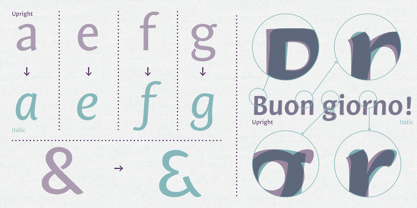
Where Mantika Informal has solid organic roots, Mantika Sans is more structured and finds its base in old style, humanistic letterforms. Several design traits contribute to the high level of character legibility Weltin achieved with Mantika Sans. Subtle variations in stroke thickness and sheared terminals give the design a demeanor that evokes pre-Renaissance manuscript calligraphy. The short ascenders and descenders also provide a compactness that is underscored by the typeface’s condensed proportions. This, combined with an ample x-height, and differentiated designs for letters such as the i and l, help create a typeface with high levels of character legibility.
Mantika Sans Italic is marked by a subtle angle, distinctive character designs and flowing strokes. “Within the variety of forms of the italics are many contrasting terminal elements that produce dynamism,” explains Weltin. “The result is a distinctive interaction between rounded and angular forms.” All this makes for a typeface that can do double duty, both as a complement to the Roman designs and as a stand-alone design.
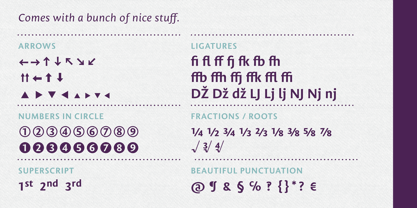
In addition to an extended Latin character set, the Mantika fonts have Pan-European glyphs, enabling the setting of Central and Eastern European languages, as well as Greek and Cyrillic. The fonts also benefit from a wide range of special symbols, including arrows, brackets, subscript and superscript lowercase letters, and multiple collections of numerals.